Premium Embroidery Logo Application on Cosmetic Bags
In the modern luggage and daily necessities industry, cosmetic bags have evolved from simple storage tools to fashionable accessories that combine practicality, aesthetics and customization. Among various surface decoration and logo processing techniques, embroidery has become a preferred choice for high-quality cosmetic bags, trusted by both brands and consumers. Unlike simple printing, heat transfer or label pasting, embroidery is not only a way to display brand logos and decorative patterns, but also a reflection of product quality, texture and added value. For travel-friendly cosmetic bags that require frequent use, carrying and friction resistance, embroidery craftsmanship shows irreplaceable advantages in durability, texture and brand communication. This article will elaborate on the complete process of cosmetic bag embroidery, mainstream craftsmanship types, comprehensive comparison with other logo processing methods, as well as the multiple benefits it brings to products and brands.
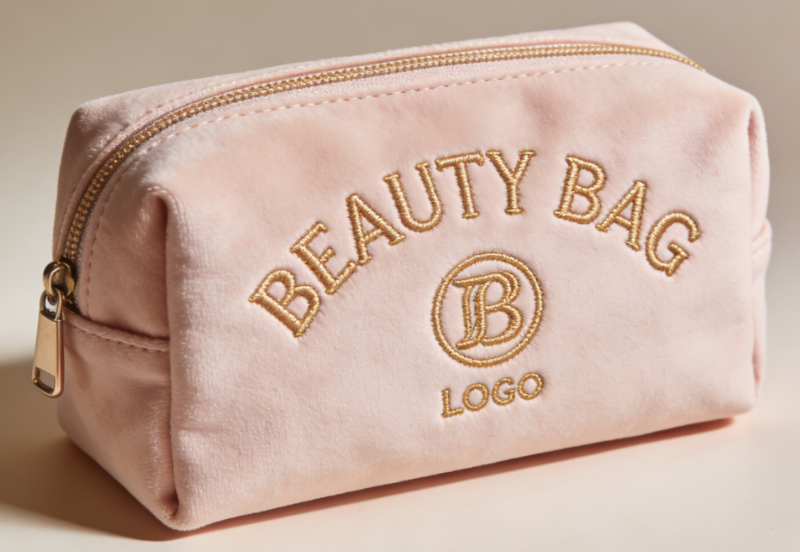
Embroidery on cosmetic bags is a precise and standardized process that requires strict cooperation between design, proofing, material preparation and formal production, ensuring that each finished product is consistent with the sample and meets quality standards. The entire process is divided into six key steps, and each link directly affects the final effect and service life of the embroidery:
First of all, pattern design and digitization is the foundation. Designers convert brand logos, decorative patterns or text into vector graphics suitable for embroidery, adjust the size, color matching and density according to the size and fabric material of the cosmetic bag, and then import the graphics into special embroidery digitizing software to generate stitch paths, control the stitch length, density and stitching direction. This step requires full consideration of the fabric characteristics of the cosmetic bag: for soft Oxford cloth, polyester fabric and waterproof nylon fabric, the stitch density needs to be adjusted appropriately to avoid fabric deformation or hardening caused by overly dense stitches.
Secondly, material selection and preparation is crucial. Embroidery threads for high-quality cosmetic bags usually use high-strength polyester threads or cotton-polyester blended threads, which have the characteristics of color fastness, friction resistance, no fading and no lint, and can adapt to daily cleaning and long-term use. According to product requirements, we will also choose gold and silver threads, matte threads or fluorescent threads to enhance the decorative effect. At the same time, a layer of lining paper or adhesive lining is added to the back of the cosmetic bag fabric to fix the fabric, prevent wrinkling or deformation during embroidery, and ensure that the surface of the bag body is flat and smooth.
Third, sample proofing and confirmation is a necessary link before mass production. We will conduct small-batch embroidery proofing on the official fabric of the cosmetic bag, check the pattern clarity, color consistency, stitch flatness and firmness, and confirm with customers or brand parties. Only after the proofing is approved can we enter the formal production stage to avoid batch quality problems.
Fourth, machine positioning and embroidery production. The cosmetic bag semi-finished products are fixed on the embroidery machine table, accurately positioned according to the preset position, and the computer-controlled embroidery machine runs at a constant speed to complete the stitching. For small-sized cosmetic bags or special-shaped parts (such as side flaps, handle sides), manual positioning and fine-tuning are required to ensure that the pattern is centered and the position is accurate. Fifth, thread trimming and quality inspection, manually trim the excess floating threads and thread ends on the front and back of the embroidery, and check whether there are missing stitches, broken threads, color differences or pattern distortion. Finally, ironing and shaping, gently iron the embroidery part at a suitable temperature to keep the fabric flat and the stitches full, and then proceed to the subsequent sewing and assembly of the cosmetic bag.
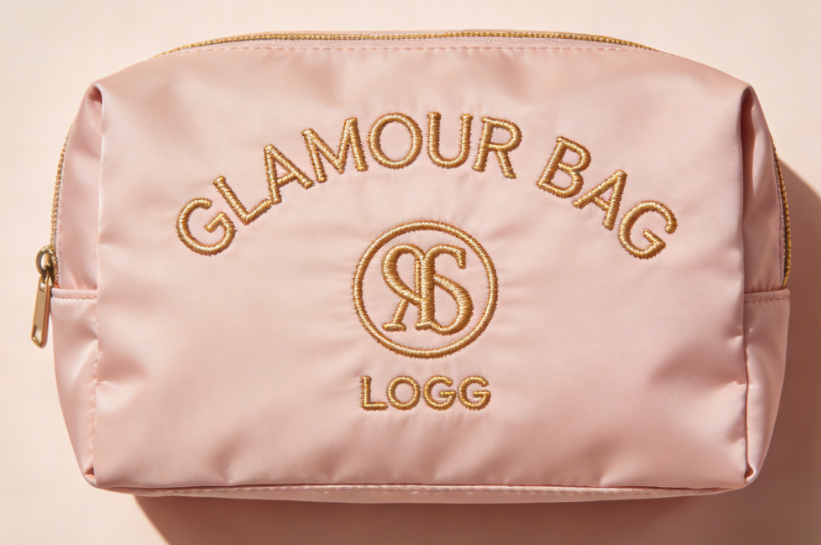
According to product positioning, decorative effects and cost control, cosmetic bags commonly use two types of embroidery craftsmanship: flat embroidery and three-dimensional embroidery, each with its own characteristics and applicable scenarios. Flat embroidery is the most widely used conventional craftsmanship, with flat stitches, uniform density, soft touch, and no obvious protrusions. It is suitable for daily cosmetic bags, simple logo decoration and large-area pattern design, with high cost performance and stable quality. Three-dimensional embroidery (also known as puff embroidery) adds a layer of special sponge foam under the stitches, making the pattern protrude obviously, with a strong three-dimensional effect and layered texture, which is mostly used in high-end cosmetic bags, limited edition products or brand-focused logo decoration, highlighting a sense of luxury and uniqueness.
In addition, for customized cosmetic bags that require environmental protection and mildness, we will use environmentally friendly dyeing threads and degradable lining materials, which comply with EU REACH and US FDA environmental protection standards, no pungent odor, no harmful substances, and fit the current low-carbon travel and green consumption social theme.
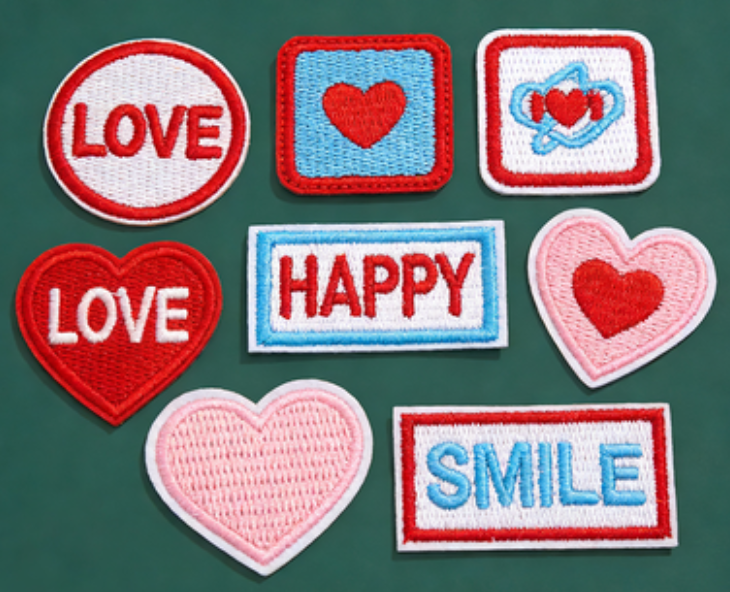
In the cosmetic bag industry, common logo processing methods also include silk screen printing, heat transfer printing, woven label sewing and metal label inlaying. Compared with these processes, embroidery has obvious advantages in four core dimensions: durability, texture, environmental adaptability and brand image.
First, durability and friction resistance. Cosmetic bags are often placed in suitcases, carried around, and rubbed with items such as cosmetics and toiletries. Silk screen printing and heat transfer printing are easy to peel, fade, crack or fall off after long-term use and repeated wiping; woven labels are easy to curl and wear at the edges; metal labels may rust or fall off. Embroidery is directly stitched on the fabric with high-strength threads, which is firmly combined, not easy to wear, not fade, not fall off, and can maintain a complete pattern for a long time, even after machine washing or hand washing, the effect remains unchanged.
Second, texture and grade improvement. Embroidery has a full and delicate texture, with a natural three-dimensional sense, which can instantly enhance the overall texture of the cosmetic bag, distinguish it from low-cost products, and highlight high-end positioning. Printing processes are flat and single, and it is difficult to reflect a sense of quality; metal labels are hard and easy to scratch the skin or other items, while embroidery is soft and fits the fabric, with a better hand feel.
Third, environmental adaptability and safety. High-quality embroidery threads use environmentally friendly dyes, do not contain harmful substances, comply with international environmental protection standards, and have no irritation to the human body. Some printing processes may produce residual solvents and pungent odors, which do not meet the safety requirements of daily contact items. In addition, embroidery does not fall off and produce debris, avoiding contamination of cosmetics and toiletries inside the bag.
Fourth, brand communication effect. Embroidery patterns are clear and three-dimensional, not easy to be blurred, and have a high recognition rate. Whether it is placed in a shopping mall display or carried for travel, it can clearly display the brand logo, deepening consumers' brand impression. The printing effect is easily blurred due to friction, and the brand communication effect is weak.
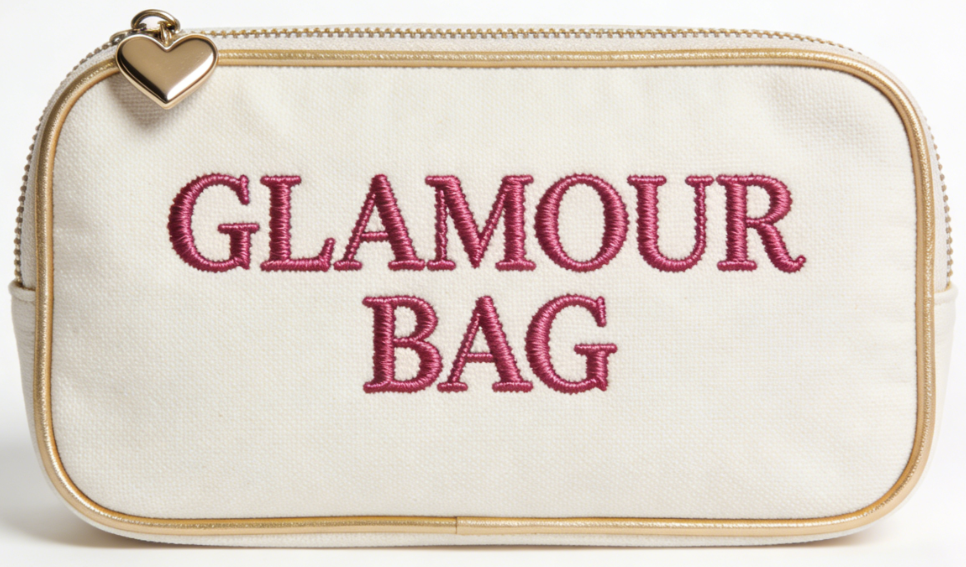
In addition to the advantages in craftsmanship and effect, embroidery also brings multiple added benefits to cosmetic bag products and brands. First of all, enhance product added value and market competitiveness. Cosmetic bags with embroidery craftsmanship are positioned higher than ordinary printed products, and can meet the needs of consumers who pursue high quality, especially in the current trend of light travel and exquisite travel, such products are more popular in the market.
Secondly, meet customized and personalized needs. Embroidery can flexibly adjust patterns, colors and sizes, support brand exclusive customization, personal pattern customization and gift customization, which is in line with the current trend of personalized consumption and cooperative product development. For jointly created products, embroidery can perfectly integrate the design concepts of both parties, retaining the integrity and uniqueness of the pattern.
In addition, embroidery fits the current social theme of sustainable and high-quality consumption. As a durable decoration process, embroidery reduces the frequency of product replacement due to pattern fading and damage, conforms to the concept of low-carbon and environmental protection, and is consistent with the design concept of green travel and lightweight luggage.
Embroidery is not just a surface decoration process for cosmetic bags, but a comprehensive embodiment of craftsmanship, quality and brand value. Its complete and strict production process ensures the stability and consistency of product quality; the diversified craftsmanship adapts to different product positioning and market needs; compared with other logo processing methods, it has outstanding advantages in durability, texture and safety; at the same time, it also brings added value and market competitiveness to products, fitting the current social trend of high-quality, personalized and environmentally friendly travel. For high-quality cosmetic bags that focus on user experience and brand building, embroidery craftsmanship will always be a core advantage that cannot be replaced, helping products stand out in the market and accompany consumers in every exquisite and lightweight journey.
Sedex OR BSCI
The charm of canvas bags
Related Article