How would bag manufacturing factories develop in 2026
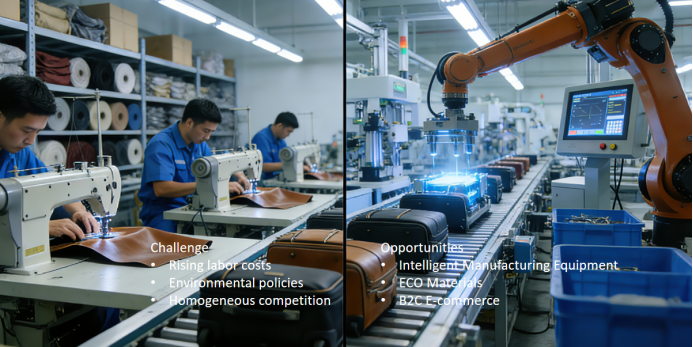
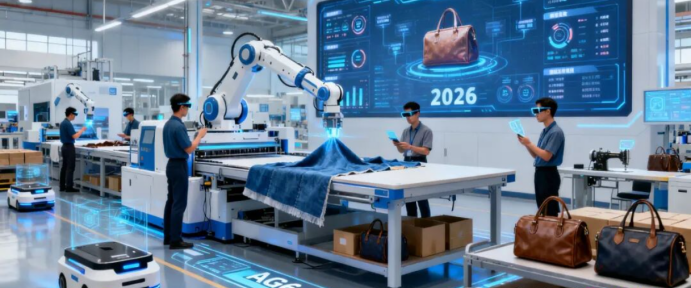
1). Intelligent Transformation of Production: Promoting MES (Manufacturing Execution System) and digital twin technology to achieve real-time visualization of production data. A case study from a leading factory shows that after introducing an intelligent hanging system, production flow efficiency increased by 52%, and the processing time per unit was reduced to 1.8 hours. Simultaneously, 3D virtual prototyping technology can reduce the sample development cycle from the traditional 7 days to 48 hours, and material loss rate is reduced by 30%. For multi-variety, small-batch orders, modular design and intelligent scheduling algorithms have reduced changeover time from 2 )hours to 20 minutes, and order response speed has increased by 3 times.
3)Collaborative Upgrade of the Supply Chain: Building a blockchain-enabled supply chain platform connecting fabric suppliers, hardware accessory manufacturers, and logistics service providers. Using RFID electronic tags for raw material traceability reduces the response time for quality anomalies from 48 hours to 2 hours. Co-building a C2M reverse customization channel with e-commerce platforms, directly connecting consumer data to the production end, increases predictive production accuracy to 85% and inventory turnover rate by 60%.
1). Materials Revolution and Circular Design
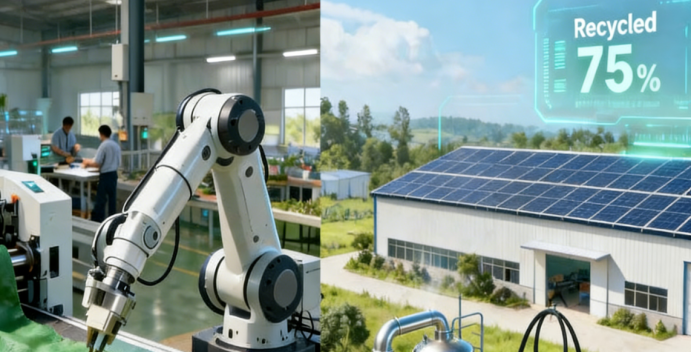
By 2026, the utilization rate of environmentally friendly materials will become a core competitive indicator for factories. The procurement ratio of bio-based materials such as recycled nylon (ECONYL®) and mushroom mycelium leather should reach over 50%, and biodegradable zippers and water-based adhesives should achieve 100% green substitution. Implementing "product lifecycle management" and designing detachable structures will increase the recycling rate of bags to 75%. One brand, through its old bag recycling program, has reduced carbon emissions by 8,000 tons annually.
2). Low-Carbon Production and Energy Innovation
Factory renovations will prioritize the use of photovoltaic rooftops and energy storage systems, aiming for a clean energy share of 35%. Introducing biomass fuel boilers to replace traditional coal-fired equipment will reduce carbon emission intensity by 42%. Through lean production, the seven major wastes will be eliminated, reducing energy consumption per unit output to 0.12 tons of standard coal/10,000 yuan, reaching an industry-leading level.
1). Functional and scenario-based innovative development of a smart modular luggage series, integrating GPS anti-loss, wireless charging, and temperature and humidity sensing modules to suit specific scenarios such as outdoor adventure and business travel. Targeting the silver economy, a lightweight walking aid case was launched, achieving annual sales exceeding 200 million yuan. Cross-industry collaborations with national trend IPs, incorporating traditional cultural elements into the design, increased the premium to 60%.
2). Emerging Markets and Channel Transformation. Leveraging the RCEP tariff reduction policy, overseas warehouses were established in Vietnam and Indonesia, increasing the revenue share of the Southeast Asian market to 25%. Through TikTok live-streaming e-commerce, "factory directly to consumer" was achieved, eliminating intermediaries and expanding the price advantage by 30%, with a private domain traffic repurchase rate of 45%. An overseas designer alliance was established, and localized designs reduced the return rate in the European and American markets to 8%.
1). Skills Restructuring and Organizational Change: Implemented the "Digital Craftsman" training program, providing targeted industrial internet talent through industry-university cooperation, achieving 100% digital skills certification rate for technician positions. Promoted flat management, established agile innovation teams, and reduced new product development cycles to 30 days. Established a "Production Data Platform," enabling frontline employees to provide real-time feedback via mobile devices, improving decision-making efficiency by 70%.
2). Brand Leap from ODM to OBM: Incubated its own designer brand, deeply cultivating content platforms such as Xiaohongshu and Instagram through the DTC model, increasing brand premium from 15% for ODM to 55% for OBM. Built a user co-creation community, collecting over 2000 creative proposals monthly, doubling the product iteration speed.
Standing at a critical juncture of industry transformation, competition among bag and luggage factories has evolved from a simple cost-cutting battle to a comprehensive contest of "digital capabilities + green assets + brand value." It is recommended that leading companies focus on deploying Industry 4.0 production lines, while SMEs concentrate on innovation in niche scenarios, sharing digital infrastructure through industrial clusters. It is projected that by the end of 2026, the industry's CR10 (top 10 companies' market share) will increase from the current 18% to 35%, with factories that complete their transformation first occupying the high end of the value chain and securing structural growth opportunities in this trillion-dollar market.
The Smart Business Guide to Food-Delivery Bags
How Much Should You Pay for Wholesale Makeup Bags
Related Article