Bag Texture Aesthetics

When it comes to bag design, people often think of style, color, or material first. But what truly determines a bag's sophistication and memorability are the textures hidden in the details.
It's not just about the tactile feedback when touched, but also a visual expression of style—rough pebbled textures convey a retro wildness, delicate cross-grain patterns exude elegance, and even minimalist plain weaves can present completely different temperaments through variations in craftsmanship.
In this article, we'll start with the core knowledge of bag texture design, combining classic examples to help you understand "how texture shapes a good bag."
In the eyes of designers, texture is never a "decorative addition," but a core element deeply intertwined with materials, structure, and usage scenarios. Currently, mainstream textures can be divided into three categories:
Natural Texture: Possessing an "Unreplicable Warmth"
Derived from the natural materials themselves, such as the pores of cowhide, the velvety feel of sheepskin, the scale pattern of crocodile skin, and the warp and weft texture of canvas.
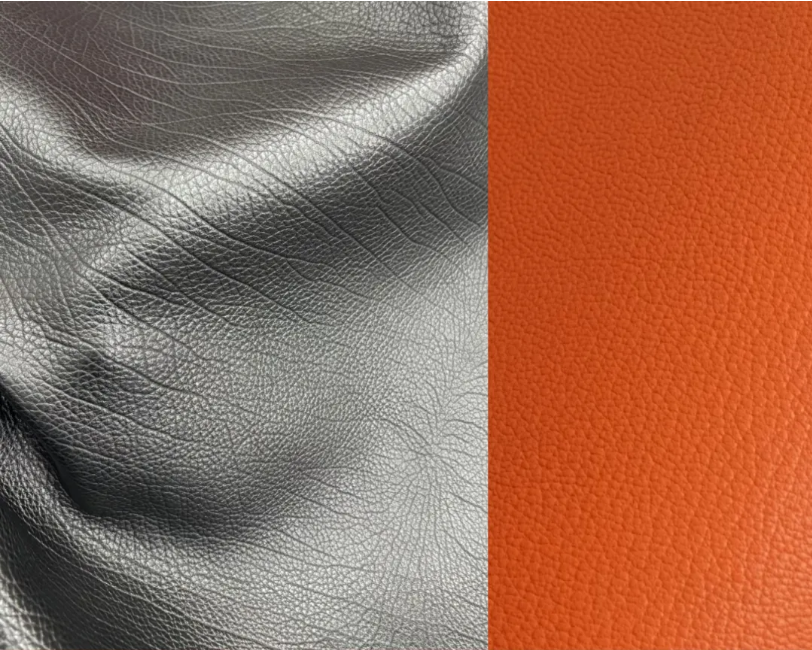
The characteristic of this type of texture is that it is "irregular yet regular"—the texture of top-grain cowhide will show subtle differences depending on the part, while the scales of crocodile skin have a natural symmetrical beauty.
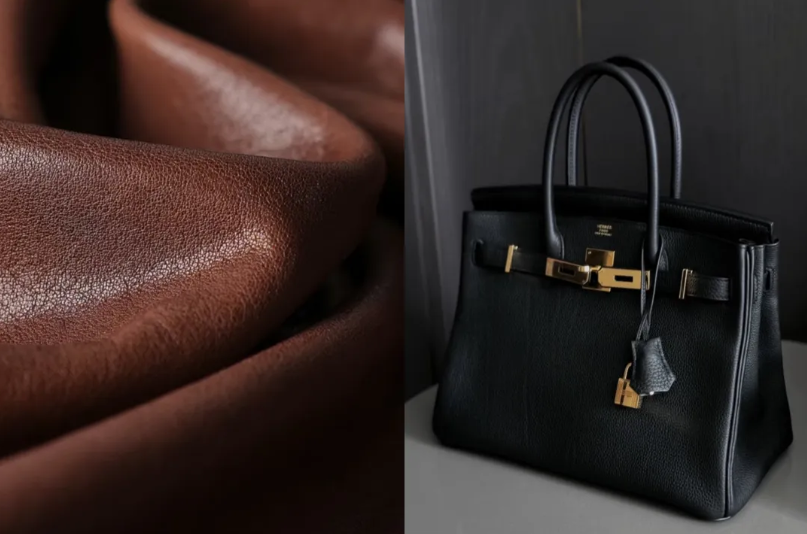
When designing, the key to natural textures is "respecting the material": Togo leather, which Hermès Birkin often uses, has a clear pebbled texture. Designers do not over-press or embellish it, but instead control the tanning process to keep the texture full and elastic, which is both textured and scratch-resistant; while crocodile leather bags emphasize the integrity of the scales to avoid splicing and destroying the natural flow of the texture.
Artificial Embossing: Precisely Conveying Style, Adapting to Diverse Needs
Textures are created on synthetic leather (PU, PVC) or recycled leather through processes such as mold pressing and laser engraving. This is currently the most flexible method in bag design. Common artificial textures include:
Cross-grain: Intersecting horizontal and vertical lines form a clear and neat texture, exuding a sleek, professional feel. Often used in business briefcases and tote bags;
Lychee Grain: Mimicking the textured surface of a lychee fruit, it is soft to the touch and wrinkle-resistant, suitable for casual backpacks and short-distance travel suitcases;
Embossed Textures: Such as logo embossing and floral embossing, these can enhance brand recognition or add a feminine touch, commonly seen in small bags from accessible luxury brands.
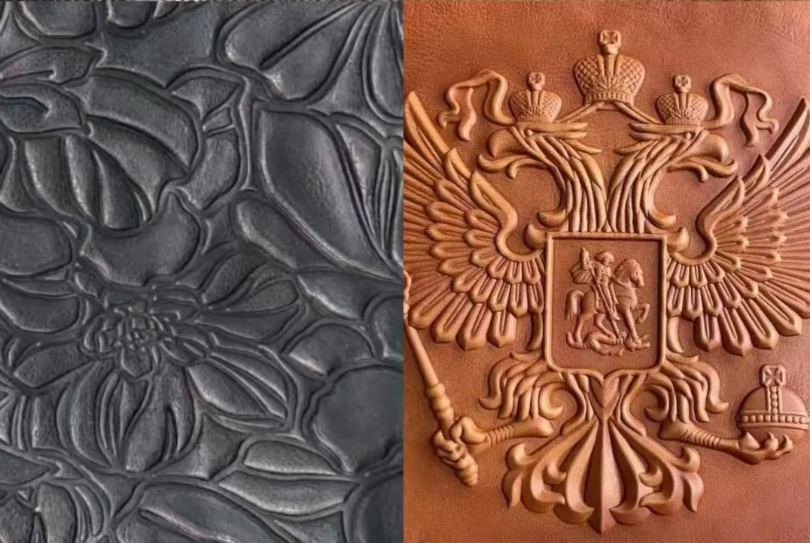
The advantage of artificial textures lies in their "controllability"—designers can adjust the depth and density of the texture according to their needs, and even combine it with color gradients to create effects that are difficult to achieve with natural textures.
Special Textures: Creating Memorable Moments Through Details
Textures created using techniques such as embroidery, weaving, washing, and distressing lean towards a "handmade" feel and "personalization." For example:
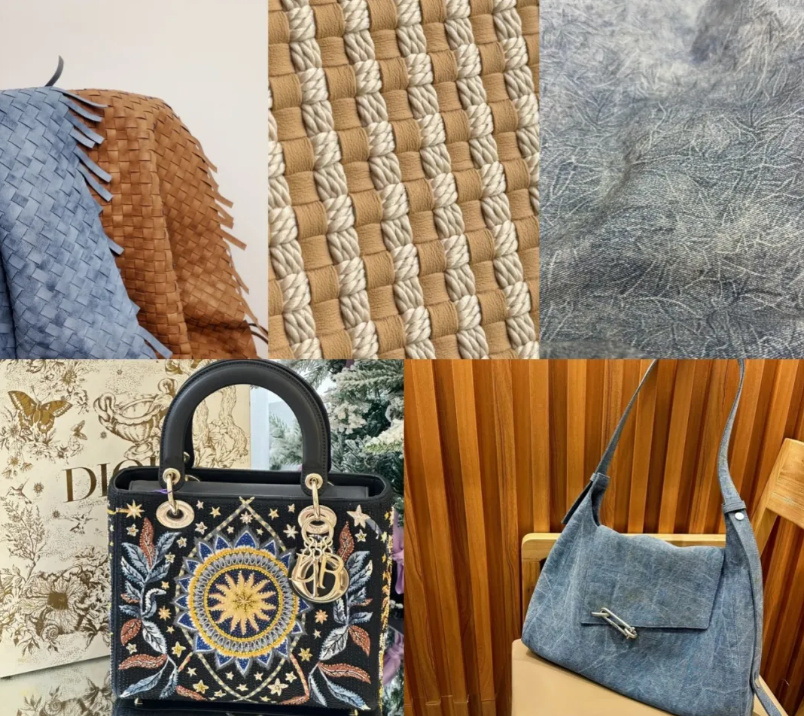
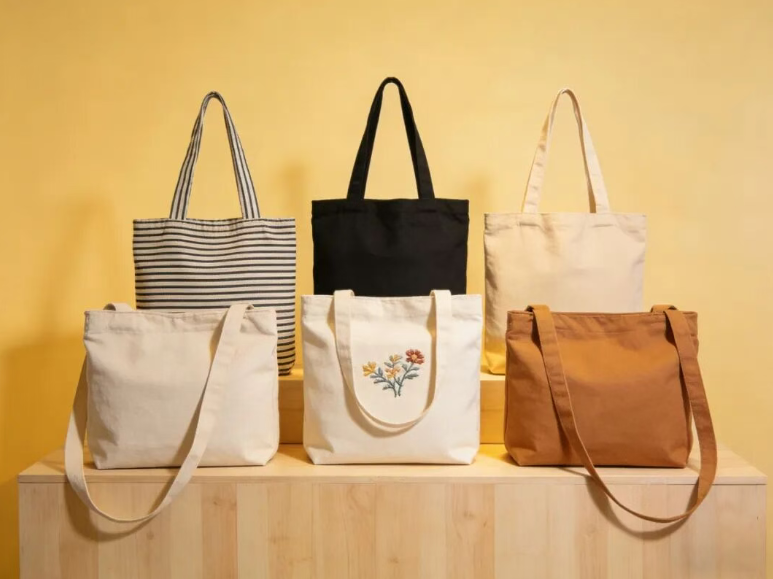
Woven Texture: Woven with rattan, leather strips, or cotton thread, this texture has a relaxed, vacation-like feel and is commonly seen in straw bags and woven tote bags.
Washed Distressed Texture: This texture is created by washing and polishing the leather surface to form irregular patterns, simulating a vintage look. Suitable for retro-style messenger bags and motorcycle bags.
Embroidered Texture: Patterns or lines are embroidered onto the surface of the bag using stitching. The texture is three-dimensional and layered, often used in creative designs from niche designer brands.
Core principles of texture design
Aesthetically pleasing texture designs are never about "the more complex, the better," but rather about adhering to two principles:
01. Adapting to the Scene and Function:
The texture must serve the bag's intended use. For example, short-distance suitcases need to be durable, so deeply embossed PC material is commonly used (deep texture, less prone to scratches); while evening bags, aiming for refinement, use delicate glossy embossed or embroidered textures. Outdoor backpacks, on the other hand, often choose coarse-textured canvas or non-slip rubber textures, which both match the outdoor style and enhance practicality.
02. Restraint from Overshadowing:
The texture is a "supporting role" and should not overshadow the overall design of the bag. For example, a minimalist underarm bag can use a light plain weave or fine cross-grain pattern; using complex large floral embossing would only make it look cluttered. A vintage-style Boston bag, paired with distressed leather texture, can enhance the style without making the texture the sole focus—the overall shape, hardware, and texture should complement each other.
Beyond theory, real-world examples better showcase the allure of texture. These three examples, each with a distinct style, perfectly illustrate "the right way to approach texture design":
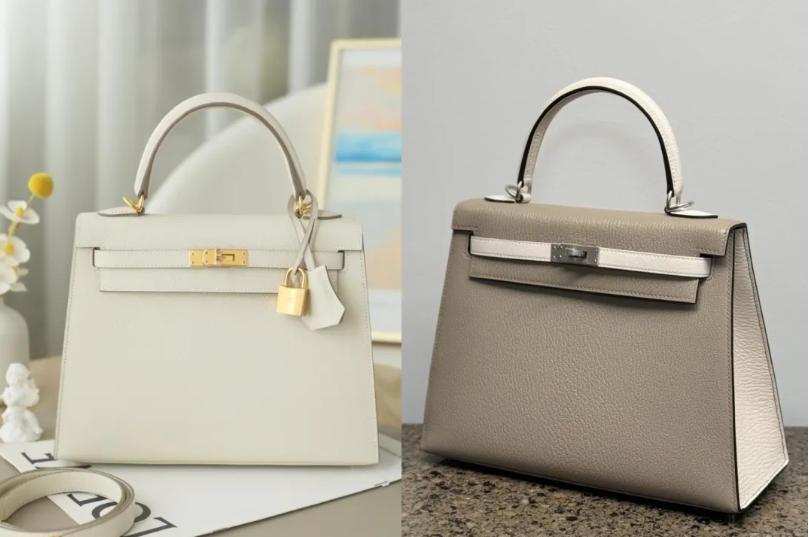
Hermès Kelly Bag – The Ultimate Respect for Natural Texture
When discussing textbook examples of the application of texture in handbags, the Hermès Kelly bag is indispensable. One of its most classic versions is made of Epsom leather – this type of leather undergoes a special tanning process, resulting in a uniform and delicate granular texture on the surface. It feels firm yet not stiff, and is also waterproof and scratch-resistant.
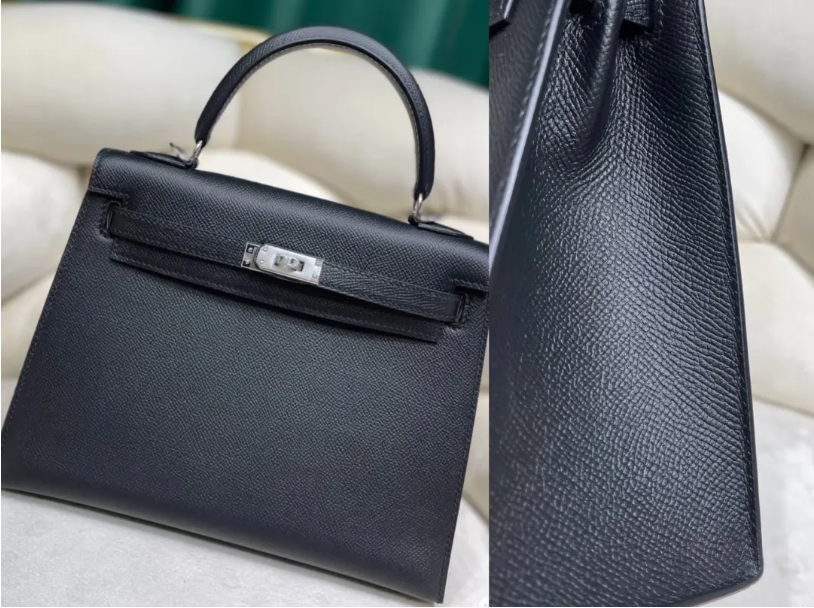
The designer didn't add any extra embellishments to the Epsom leather's texture. Instead, through a "less is more" design logic, the texture became the core of the overall quality: the bag's lines are simple, and the hardware uses matte metal, creating a contrast of "hardness and softness" with the delicate texture. The color palette primarily features low-saturation shades like black, off-white, and caramel, further highlighting the natural sheen of the texture.
The Kelly bag's success lies in making texture an integral part of the brand's identity—even without seeing the logo, simply touching the fine grain of the Epsom leather evokes its luxurious feel. This approach of "respecting natural textures and conveying sophistication through details" remains a benchmark for luxury handbag design.
Loewe Puzzle Bag – “Structural Innovation” with Unique Textures
Loewe's Puzzle bag breaks away from traditional bag design logic with its “patterned textures.” Its core highlight lies in creating a “three-dimensional geometric” bag body through the patchwork of leathers of different textures and colors.
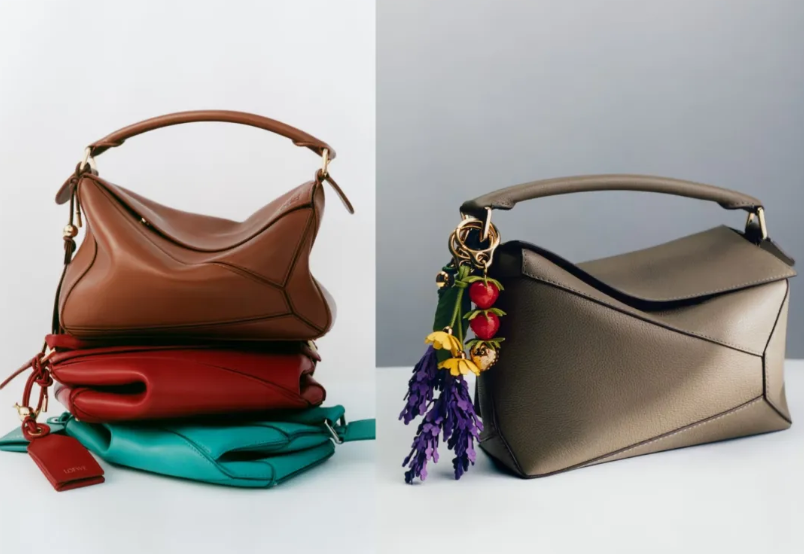
The combination of different textures doesn't appear cluttered; instead, the "difference in texture" highlights the bag's folded structure. When you fold and deform the Puzzle bag, the different textures of the leather create varying light and shadow effects, making the "structure" the visual focus.
The success of the Puzzle bag proves that texture isn't just "flat decoration," but a tool for "shaping three-dimensional structures." It shows us that the boundaries of texture design can be infinitely extended.
Ideal OEM/ODM Carrier for Pet Travel Bag PB0017
2026 European Heatwave Sourcing Guide: Capture Booming Cooling Demand
Related Article