Japan vs US/EU Cosmetic Bags: Key Differences and Market Insights
There are significant differences between the cosmetic bag market in Europe, America, and Japan. Understanding these differences is helpful for product development and selection, as well as market expansion. This article will provide cosmetic bag selection strategies for manufacturers and brands expanding into this market from six aspects: aesthetics, usage scenarios, product design, purchase motivation, development and selection.
- Aesthetic Differences
1) Japanese Market
Japan has many well-known cosmetic brands. To penetrate the Japanese market, it's essential to understand consumer preferences. Japanese cosmetic bags combine cuteness, sophistication, and practicality. Specifically:
Color Preference: Light colors generally appeal to Japanese consumers, such as soft milky white, beige, matte pink, and light blue, creating a comfortable visual experience.

Cute Style: They prefer designs with small or subtle decorative details, giving a refined yet understated feel.
Decorative Design: The Japanese market greatly favors lace trim, and patterns are often printed in small areas, incorporating cute elements such as flowers, cats, and stars.
Function Priority: Classic cosmetic bags typically have clearly defined internal compartments and a fully open or multi-layered design for easy daily use.
In general, Japanese cosmetic bags strive for cuteness without being tacky, combining cuteness and practicality.
2) European and American Markets
The Western market has a more personalized, fashionable, and visually impactful aesthetic. For Western consumers, cosmetic bags are not just storage tools but also a way to express their individuality and brand identity. Specifically, this manifests in the following ways:
Color Preferences: Gray, black, red, metallic colors, and bright colors.

Pattern Design: Usually features clear brand standards, often using contrasting colors to attract attention. Bold and avant-garde designs leave a lasting impression.
Material Selection: Emphasis is placed on material texture and the bold use of new materials, highlighting luxury, such as leather or metal embellishments.
Brand Story: Western brands excel at storytelling, and consumers are willing to pay a premium for brand stories.
Compared to the Japanese market, Western markets emphasize the social attributes and brand image of cosmetic bags, while the Japanese market places greater emphasis on details and functionality.
- Differences in Usage Scenarios
1) Japanese Market
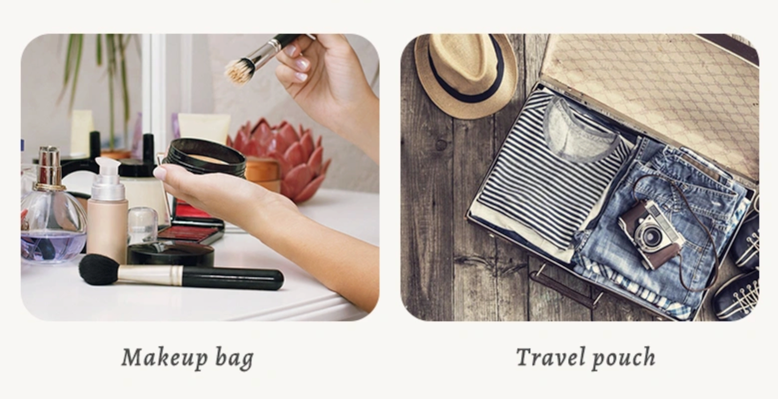
Japanese consumers primarily focus on storage functionality and ease of use when purchasing cosmetic bags. Typical usage scenarios include home storage, daily commutes, and short trips.
Daily Commutes: Cosmetic bags serve as "bags within bags," containing lipstick, mirrors, or powder compacts.
Travel Storage: Three-dimensional box-style cosmetic bags or hanging cosmetic bags. Used for storing skincare and cosmetic products.
2) European and American Markets
European and American consumers prioritize personal expression when purchasing cosmetic bags. Usage scenarios are more diverse. They emphasize presentation, capacity, and portability.
Portability: Cosmetic bags are often casually placed, so an attractive appearance is a crucial consideration.
Large Capacity Needs: European and American consumers prefer large-capacity cosmetic bags that can hold all their cosmetics.
Travel Use: They prioritize portability and brand value.
- Product structure and design differences
|
Comparison Dimensions |
Japanese Market |
European and American Markets |
|
Appearance |
Cute, Simple, Timeless |
Contrasting Colors, Prominent Brand Logo |
|
Color Preferences |
Soft Colors (Beige, Matte Pink, Light Blue etc) |
Bright, High-Contrast Colors (Red, Black,Gray, Metallic) |
|
Structural Design |
Flat, Vanity Case, Clear Partitions, Full Opening; |
Large Capacity, Diverse Shapes, Emphasizing Visual Aesthetics |
|
Usage Scenarios: |
Bag-in-Bag, Dressing Table, Travel |
Portable, Travel, Display, Gift |
|
Functional Priorities: |
Easy to Organize, Convenient Access, High Space Utilization |
Beautiful Appearance, Brand Recognition, Trendy Feel |
|
Main Materials: |
Durable, Lightweight, Stain-Resistant |
High-Quality, Diverse Materials, Highlighting the Brand |
- Differences in Purchase Motivation
1) Japanese consumers typically prioritize practicality when buying cosmetic bags, focusing on ease of organization and storage. Their primary motivation is usually the bag's aesthetic appeal and the emotional value it adds.
- Western consumers' core purchase motivation is brand design; eye-catching appearance and colors reflect their personal style. Functionality and capacity are secondary considerations.
- Development and Product Selection Suggestions

1) For the Japanese Market: Cosmetic bag design should prioritize practicality, ensuring clear and logical compartments for easy access. Light colors and subtle, soft patterns are recommended. Small to medium capacity and lightweight design make it easy to fit into a work bag. Smooth zippers, even stitching, and durable fabrics are also important.
- For the Western Market: Cosmetic bag designs often feature contrasting colors, bold hues, and prominent brand logos to emphasize individuality. Sufficient capacity is crucial for carrying multiple cosmetics at once. High-quality materials and metal hardware create a premium feel. Incorporating fashionable elements based on current trends can further enhance consumer desire.
Conclusion
Different cultures give rise to different needs. Understanding these needs can help us develop cosmetic bags that meet the needs of the Japanese market while also catering to the fashion and brand demands of the European and American markets, thus expanding our global cosmetic bag business and achieving a stable repurchase rate. Chiterion, a cosmetic bag manufacturer with 18 years of experience, has a deep understanding of the Japanese and European/American markets. If you are interested in expanding into these markets, please leave us a message, and we can help you develop cosmetic bag that meet their markets.
Small Shopping Bag, Big Vision: Carrying Forward Sustainable Development
Exploring Tyvek Paper's Role in Contemporary Bag Design
Related Article