Exploring Tyvek Paper's Role in Contemporary Bag Design
Introduction
Tyvek®—often called DuPont paper—is an advanced material created by American chemical giant DuPont. Thanks to its remarkable physical and chemical attributes, this versatile substance has gained traction across various sectors. The handbag industry, in particular, has embraced Tyvek® for its standout features and practical advantages. Below, we examine what makes this material special, where it falls short, and how it's transforming modern bag design.

一,Material of Tyvek Paper
- Material Traceability
In 1967, scientists from the American DuPont Company were exploring the application of new polymers when they accidentally discovered a unique material form - by using the flash evaporation method to spin high-density polyethylene (HDPE) into continuous fibers, and then bonding them together through heat pressing to form sheets. This material, named Tyvek® (commonly known as "DuPont paper" or "Teflon" in Chinese), was initially used in building moisture-proof layers and medical protective clothing. No one could have imagined that half a century later, it would appear on fashion shows and designer handbags.
Interestingly, the birth of DuPont paper originated from a "failed" experiment. The researchers originally intended to develop a new textile process, but unexpectedly obtained this cross-border material that combines the characteristics of paper, fabric, and film. This "beautiful mistake" eventually gave rise to an industry with an annual market size of over 1 billion US dollars.

- What is Tyvek paper material
Tyvek® is a high-density polyethylene material produced through the flash spinning process. It looks like paper but is actually as tough as fabric; it feels thin and light yet possesses the waterproof properties of plastic. This unique texture, which is "like paper but not quite paper, and like fabric but not exactly fabric", has enabled it to cross over from the industrial protection field into the fashion design circle, becoming a new favorite among handbag designers.

- Core advantage of Tyvek paper
Under the electron microscope, DuPont paper exhibits an enchanting three-dimensional mesh-like structure - countless 0.5-10 micrometer polyethylene fibers randomly interweave, forming a complex network with a density of several hundred million micropores per square centimeter. This structure endows it with contradictory yet unified characteristics:
- Ultra-lightweight, reducing travel burden
The density of DuPont paper is only 0.38g/cm³, which is approximately 50% lighter than traditional canvas and 70% lighter than leather. An A4-sized DuPont paper backpack weighs less than 100 grams, truly achieving a "zero burden" carrying experience, perfectly meeting the lightweight travel needs of modern urbanite.
- Waterproof and breathable, with multiple functions
The material itself has excellent water-proof, capable of resisting rain splashes; at the same time, its microporous structure allows gas molecules to pass through, preventing items inside the bag from getting damp and moldy. This "waterproof and breathable" contradiction is unified, solving the functional pain points of traditional materials.
- Strong and durable, resistant to tearing
The tensile strength of DuPont paper is several times that of ordinary paper, and it does not weaken even in a humid environment. The specially treated DuPont paper handbag can withstand daily use's friction and folding, with a lifespan of 3-5 years.
- Environmentally friendly and recyclable
As a 100% recyclable polyethylene material, DuPont paper complies with the EU REACH environmental standards, and the carbon emissions during production are much lower than those of leather and PVC. Some brands have launched "trade-in for recycling" programs to achieve material recycling.
- High design plasticity
DuPont paper supports various processes such as digital printing, screen printing, and heat pressing, enabling the realization of fine patterns and three-dimensional textures. Its unique wrinkled texture generates personalized marks over time, forming a retro aesthetic of "the more you use, the more it has a flavor".
- The limitations of Tyvek paper
|
Limitations |
Specific manifestations |
Countermeasures |
|
Poor heat resistance |
Deforms easily at temperatures above 80℃, not suitable for being close to heat sources |
Avoid direct sunlight and keep away from ironing. |
|
Limited load-bearing capacity |
Not suitable for loading heavy items (recommended weight < 5kg) |
Strengthen the bottom structure during design |
|
The texture is relatively hard. |
The new bag feels similar to thick kraft paper. |
It will gradually become softer after use. |
|
The cost is higher. |
he price of high-quality DuPont paper raw materials is 3-4 times that of ordinary canvas. |
It is targeted at the mid-to-high-end market. |
5. Key Production Process Points
Cutting: Use ultrasonic cutting tools to avoid burrs
Printing: It is recommended to use UV-curable ink to ensure the durability of the pattern
Seaming: Use special nylon thread and keep the stitch spacing within 3-4mm
Accessories: When pairing with metal parts, add spacers to prevent tearing
6. Innovative Applications in Handbag Design
1)Reinterpretation of Classic Styles:
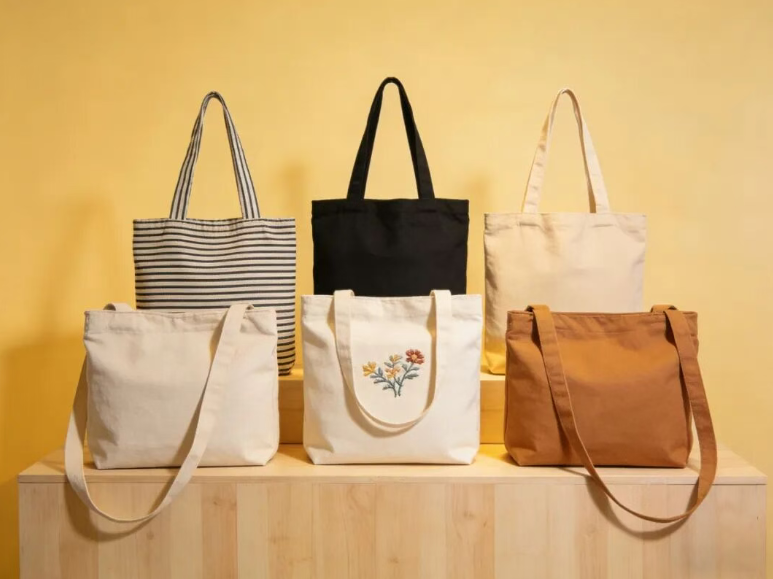
Tote Bags: Utilizing the rigidity of materials to create three-dimensional shapes, such as the Tyvek series by the Japanese brand FREITAG.
Shoulder Bags: Enhancing load-bearing capacity through multi-layer composite techniques, represented by the brand Out of the Woods.
Handbags: Leveraging the foldability of materials to design ultra-thin and portable styles.
Designers utilized the heat-sealing property of DuPont paper to achieve seamless connection, creating a streamlined appearance that is difficult to achieve with traditional sewing techniques.
The rise of DuPont paper handbags is not merely about choosing a physical material, but also about embracing a design philosophy - it challenges the notion that "expensive = high quality" and the simplistic logic that "natural = environmentally friendly" - it proves that functionality, environmental friendliness and aesthetics can be perfectly unified. For consumers who pursue individual expression and sustainable lifestyles, a DuPont paper handbag not only represents an item, but also a vote for the future lifestyle. In this sense, DuPont paper has transcended the realm of "material" and has become a cultural symbol: light yet strong, ordinary yet durable, industrial yet humanistic.
Japan vs US/EU Cosmetic Bags: Key Differences and Market Insights
Sustainable Washable Kraft Paper Applications in Bag Making
Related Article