How Can Brands Balance Sustainability and Performance in Bag Products?
Sustainable materials have become standard in the bag industry. While material selection is important, performance remains crucial for repeat purchases and brand reputation. So how can sustainability and performance be balanced?
This isn't an either-or choice; choosing sustainable materials doesn't necessarily mean sacrificing product performance. This article will analyze how brands can balance sustainable value and usability in bag products from the following aspects:
- Start with product positioning, not materials
In the early stages of transformation, brands often fall into a misconception: choosing environmentally friendly materials first, then considering how to make handbags. This approach often leads to a misalignment between product performance and brand positioning.
The correct logic should be: first determine the target audience for the product, then decide which environmentally friendly materials to use.
For example:
Commuter bags → prioritize performance and durability, with sustainability as a secondary consideration.
Natural and sustainable series → prioritize sustainable materials, functionality only needs to meet basic needs.
High-end series bags → performance and environmental protection can be satisfied simultaneously.
Sustainability is not a uniform standard, but rather a layered strategy.
- Achieving Complementary Performance Through "Material Combinations"
Established brands don't just use a single sustainable material; composite materials are often the preferred choice for many brands.
1) Key materials use sustainable materials
For example:
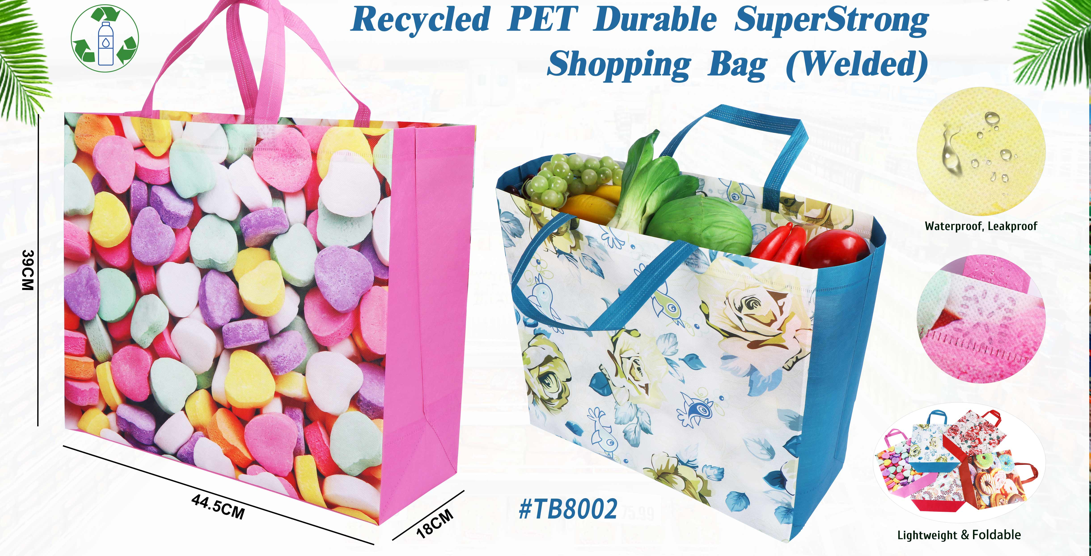
RPET
Recycled nylon
Recycled PU
Bamboo fiber
Pineapple fiber
Bio-based leather
2) Accessory materials prioritize bag performance
For example:
Bag bottom
Strap connection points
The Handles
Metal parts, etc.
These still utilize established traditional materials or repeatedly tested eco-friendly materials to ensure structural stability and reliability.
This combination of "Sustainable materials for main part + functional traditional materials" is currently the most widely used and mature sustainable strategy in the industry.
- Compensating for Material Performance Differences Through Structural Design
Sustainable materials have varying performance characteristics, such as:
Tear resistance
Abrasion resistance
Aging resistance
These aspects may be inferior to traditional materials; for example, recycled PP woven fabric has lower abrasion resistance than virgin material.Therefore, experienced or professional brands will compensate for these shortcomings by design the structure.
For example:
Adding reinforcement to stress-bearing areas
Thickening certain areas with a double-layer structure
Reinforcing key areas with webbing
By optimizing the structure, the overall durability is improved, rather than solely relying on the material itself.
- Layered Management of Product Structure
The reason why some brands struggle to balance sustainability and performance is essentially a product structure management problem.
Professional brands typically divide their products into the following three levels:
|
Product Positioning |
Sustainable Requirements |
Product Performance Requirements |
|
Basic Model |
Low to Medium |
Medium |
|
Mainstream Model |
Medium to High |
High |
|
High-End Model |
High |
Extremely High |
Different positioning leads to different market roles, which effectively avoids using a single environmental standard for all products and prevents the brand from knowing how to develop and manage its product line.
- Collaborating with the Supply Chain to Reduce Costs
Achieving a good balance between sustainability and performance ultimately depends on a strong supply chain. A mature supply chain can provide the most competitive market position.
Mature brands primarily reduce costs through the following methods:
1) Securing sustainable resources in advance
2) Collaborating with material suppliers to jointly develop materials with specific colors and specifications
3) Testing new materials together with manufacturers
Compared to simply purchasing off-the-shelf materials, this collaborative model can achieve:
Reduced testing costs
Maintaining stable quality
Accelerating new product development
Therefore, balancing sustainability and performance is not a simple, single decision, but rather a systematic plan.
6. Market Acceptance of sustainable Concepts
Sustainability is not just a one-sided brand message; it also requires consumer acceptance. Many brands often overlook consumers' recognition of environmental values. When consumers believe that purchasing sustainable products has greater social value and aligns with long-term sustainability, they are more tolerant of differences in price and certain features. This is why many consumers are willing to accept higher prices for sustainable materials compared to ordinary materials, thus enabling brands to command a premium.

In summary
In an era where sustainable materials have become a basic requirement for the industry, sustainability and performance are no longer opposing forces, but rather a combination that can help brands enhance their competitiveness. A truly mature brand no longer focuses solely on choosing between sustainability and performance, but instead builds a balanced system of product performance and environmental sustainability, centered around product positioning. Therefore, the future of bags will not be determined by competition in design, especially given the power of AI, which will diminish the advantage of design. Instead, the comprehensive synergy of "product strategy +sustainable materials + supply chain capabilities" will determine who will dominate the market in the future.
Chiterion is a supplier with 18 years of experience in bag development and manufacturing. Deeply rooted in the bag industry, we understand the real needs of different markets regarding sustainability and performance. We can help brands better balance eco-friendly materials and product performance, providing clients with practical and mass-producible bag solutions.
Eco-friendly fabrics made from natural fibers
JUTE SHOPPONG BAGS:An Environmental Manifesto of Bringing the Countryside into the City
Related Article