Are Sustainable Materials Really More Expensive? A Price Analysis in Bag Industry
Many brands hesitate when choosing sustainable materials: will they make their products less competitive?
So, are sustainable materials really that expensive? The answer might be more complex than you think. While the unit price of materials is important, it's only one part of the cost. A product's profitability depends on its cost structure throughout its entire lifecycle.
This article will analyze the true cost structure of eco-friendly materials in the bag industry from the following price perspectives to help you decide whether to choose sustainable materials for development.
1. Are Sustainable Materials Always More Expensive Than Traditional Materials?
From the perspective of unit price, most sustainable materials are slightly more expensive than traditional materials. For example:
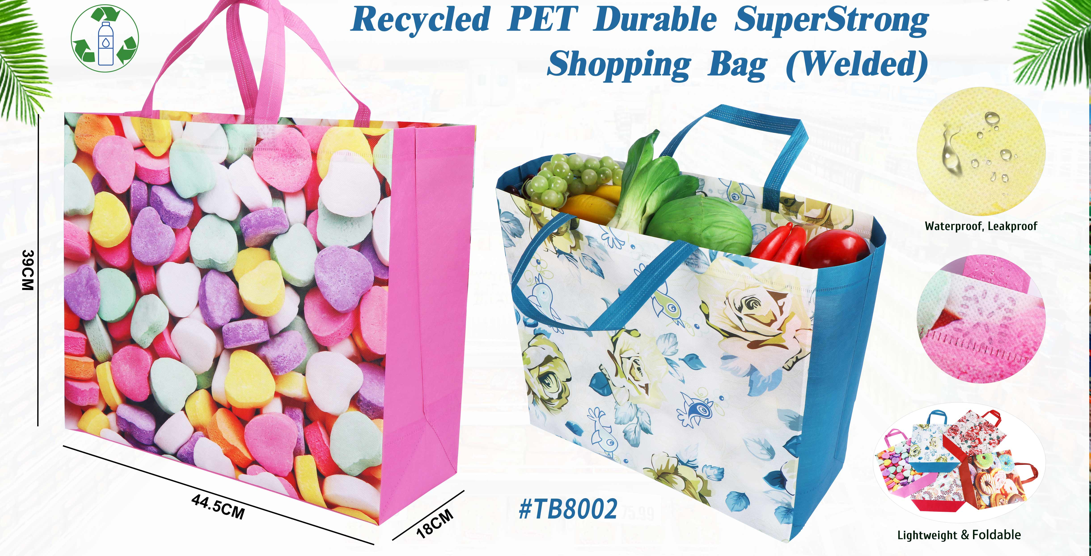
RPET vs Vergin Polyester
Recycled Nylon vs Common Nylon
Recycled PU or Bio-based PU vs Regular PU
The price per yard of eco-friendly materials may be 5% - 20% higher than that of regular materials. However, it must be emphasized that the unit price of materials does not equal the true cost of the product. Material costs only account for 30% - 50% of the total cost. Other factors to consider include:
Quality risks
Production losses
After-sales costs
Brand pricing space
These "hidden costs" often reflect the true value of environmentally friendly materials.
2. Sustainable material are reducing overall costs
With the widespread application of sustainable materials, their prices are decreasing, leading to lower overall operating costs.
1) High stability and reduced losses in environmentally friendly materials
Most environmentally friendly materials come from large-scale chemical systems, resulting in significantly improved stability. For example:
RPET material has a more uniform weave and is more durable;
Recycled nylon has less color difference and better stability;
Bio-based PU is more resistant to aging.
Compared to low-priced ordinary materials, sustainable materials in mass production:
Batch fluctuations are smaller;
Color differences are more controllable;
Rework rates are lower.
This greatly reduces production costs, quality control pressure, and avoids compensation due to delivery delays.
2) After-sales and complaint risks
As consumers' demands for product quality continue to rise, customer complaints related to low-quality materials are also increasing. Common problems with ordinary materials include: color difference, peeling, and odor. These issues bring hidden costs, including order discounts, customer claims, and damage to brand image. While ordinary materials may seem cheaper, these hidden costs can actually exceed the cost of products using environmentally friendly materials. Therefore, high-standard sustainable materials, due to stricter production processes, can actually reduce after-sales costs. In the long run, this is why many brands are willing to use sustainable materials at a slightly higher price than ordinary materials.
3. Sustainable Materials are Enhancing Brand Value
From a market perspective, brands are not only treating sustainable materials as a cost item but also as a pricing tool, increasing the premium for using them.
1) Consumers are willing to pay for the "sustainability" concept
European and American brands have made recycled material content, recycled material traceability, and carbon footprint important marketing selling points to promote their brands. For the same bag, an upgraded version made with sustainable materials will be 10% - 30% more expensive than one made with ordinary materials. What does this mean? A 10% increase in material costs can lead to a 20% increase in selling price. Therefore, sustainable materials are reshaping the pricing logic of the bag industry, rather than simply increasing prices.
- The attribute of sustainable materials raises the entry barrier for brands.
Many major international brands incorporate environmental protection into their supplier qualification systems:
Factory compliance certifications
Factory audit documentation (e.g., GRS certificate)
Ratio of recycled materials
Sustainable supply chain capabilities. Therefore, only suppliers with environmental qualifications can easily enter the mid-to-high-end brand and international retail channels. For manufacturers, this essentially means acquiring high-quality customers through sustainable materials.
- Higher costs caused are not the materials themselves, but "choosing the wrong materials."
Many brand projects fail, and the brands attribute the losses to expensive materials. However, the real reason is that they: ignored product positioning and blindly used high-quality materials. This leads to a mismatch between product performance and materials, resulting in excessively high costs and pricing difficulties, ultimately leading to project failure.
The truly scientific pricing logic is: sustainable materials must align with the brand positioning and target customer group, not supersede it. Otherwise, project failure will result.
5. Cost Structure Trends of Sustainable Materials
Currently, more and more brands are choosing environmentally friendly materials, which has prompted material suppliers to actively develop such materials, leading to a gradual decrease in their costs:
Large-scale production reduces material unit prices;
Technological advancements improve yield rates;
Policies drive industrial investment
Especially for RPET, recycled nylon, bio-based materials, and plant fibers.
In the next three years, the price gap between sustainable materials will continue to narrow, and the unit price may catch up with that of traditional materials. At that time, the price of sustainable materials will no longer be a barrier to brand selection, but rather a basic requirement for the industry.
Conclusion
Sustainable materials are reshaping the cost structure of the bag industry. Truly experienced brands no longer ask, "Are sustainable materials expensive?" but rather how to use them to create a long-term, stable product line and profit margin.
16 Benefits of Promotional Insulated Cooler Bags
2026 Global Analysis of the Current Status of Recycled Materials Development
Related Article