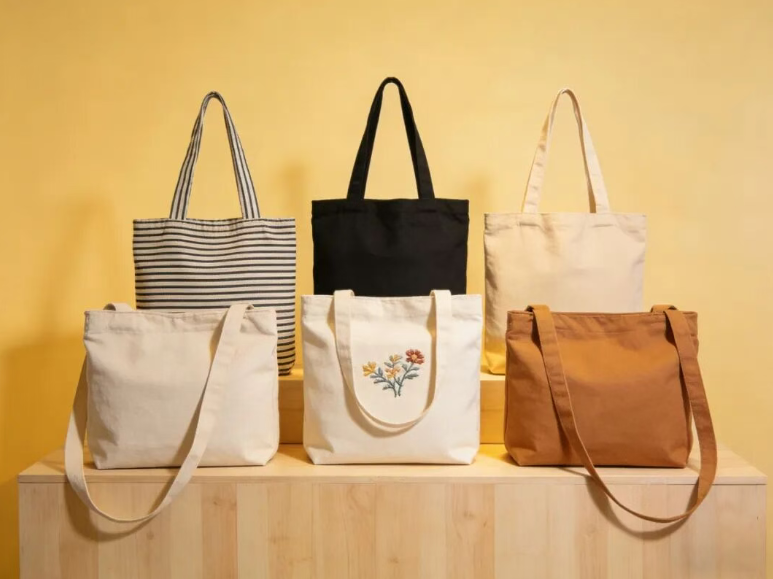
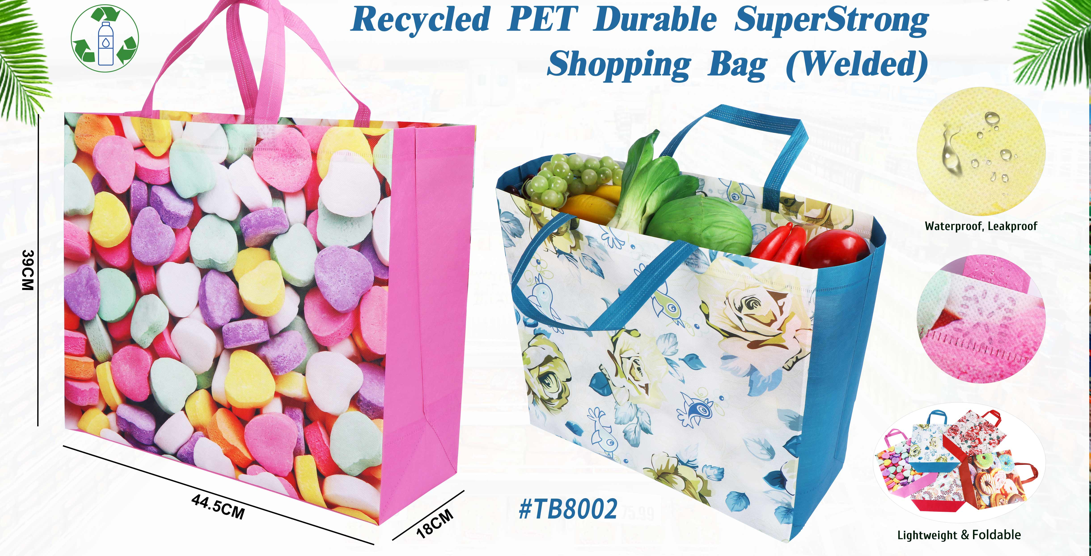
How to customize eye-catching and practical PP woven tote bags?
PP Woven tote bags are not only practical but also powerful tools for brand promotion. Whether it's an advertising bag for an exhibition, an oversized eco-friendly bag, or a "eye-catching bag" on the street, four key points must be considered when customizing them: materials, printing, size, and design. Customized woven tote bags require careful attention to the environmental friendliness of the materials, the clarity of the printing, the bag's load-bearing capacity, and the matching of the design style. Exhibition advertising bags should highlight the brand logo and convey information, while eye-catching bags should focus on the appearance design and the impact of colors.

What are woven bags/tote bags? A breakdown of their features.
Woven tote bags are bags made from polypropylene (PP) or polyethylene (PE) through a weaving process. They are lightweight, wear-resistant, waterproof, and foldable. They are widely used in industrial packaging, logistics, shopping malls, exhibition gifts, and eco-friendly shopping. In recent years, with increasingly stringent environmental policies and rising brand marketing demands, customized tote bags have gradually become an important tool for companies to convey their brand image and philosophy. Especially at exhibitions and promotional events, customized tote bags with brand logos not only enhance brand image but also extend product lifespan and improve communication efficiency. The market demand for "eco-friendly bags" is expected to further increase by 2025, driving companies to pay more attention to biodegradability in their material selection.

Key Steps for Customizing Eye-Catching Bags and Exhibition Advertising Bags: Clearly Define the Usage Scenarios and Target Audience Before customization, it's essential to understand the intended use: is it for exhibition giveaways, holiday promotions, environmental advocacy, or street advertising? Different scenarios require different bag designs and functionalities. For example, exhibition advertising bags need to be easy to carry and display the brand logo, suitable for distributing promotional materials; while street "eye-catching bags" should emphasize visual impact and trendy design to attract the attention of young people.

Choose environmentally friendly and durable materials. Currently, the mainstream materials include ordinary PP woven bags, laminated bags (glossy/matte film), and biodegradable eco-friendly bags. 1. Ordinary PP woven bags: High cost-performance ratio, suitable for single use; 2. Laminated bags: Better printing effect, suitable for occasions requiring clear patterns or colored logos; 3. Eco-friendly bags: Biodegradability rate of over 90%, complying with the new "plastic ban" regulations in various regions by 2025, recommended for enterprises to demonstrate social responsibility.
Printing Design and Logo Placement Tips: The printed content on customized bags should be clear, concise, and highly recognizable by the brand. The main printing methods are screen printing and digital printing. Screen printing offers more vibrant colors and is suitable for large-volume orders; digital printing is more suitable for small-batch customization. The logo is recommended to be placed in the center of the bag or at the top of the handle for easy identification and brand awareness. Text layout should follow the "three-second rule"—the brand information should be understandable within three seconds.

Size and Load-Bearing Capacity Standards: Regarding size, the dimensions should be determined based on the intended use:
1. Exhibition Gift Bags: Standard size is around 30cm x 40cm, easy to carry and store;
2. Large Eco-friendly Bags: Can be 60cm x 80cm or larger, suitable for daily shopping and travel;
3. Eye-Catching Bags: Larger sizes or unique designs to enhance visual appeal.
Regarding load-bearing capacity, a 30cm x 40cm tote bag should generally be able to withstand a weight of 5kg or more, while extra-large eco-friendly bags should withstand a weight of 10kg or more. Suppliers can be requested to provide tensile test reports to ensure consistent quality.
Common Misconceptions in Purchasing and Customization:
1. Price First: Low-priced products may use inferior raw materials, making them easily damaged or having a pungent odor.
2. Ignoring Environmental Standards: By 2025, many regions have implemented strict environmental standards; using products that do not meet these standards will damage a company's image.
3. Neglecting Design Review: Printed artwork should be previewed in advance to avoid issues such as color differences and typos.
4. Blindly Pursuing Personalization: Customized bags should balance practicality and aesthetics; excessive design may lead to inconvenience. The core of customizing woven bags and tote bags lies in "appropriate material selection, clear design, and well-defined purpose." It is recommended to compare several suppliers before customization, clarify product parameters and environmental standards, and ensure that the final product not only meets usage needs but also enhances the brand image.

Can woven tote bags be reused?
Yes, especially woven bags made with environmentally friendly materials or thickened processes, which have good abrasion resistance and can be used multiple times.
Which printing method is recommended for exhibition advertising bags?
Screen printing is recommended. It offers rich, long-lasting colors and is suitable for mass printing brand logos and slogans.
What are the certification standards for eco-friendly bags?
Mainly, it depends on whether they comply with GB/T 38082-2019 "General Technical Requirements for Degradable Plastic Bags" or the EU standard EN 13432.

The Differences Among Supermarket, Brand, and Event Shopping Bags? A Complete Purchasing Guide
“Transformers” in the world of transparent materials: How PVC, EVA, and TPU are reshaping modern life?
Related Article