2026 Global Analysis of the Current Status of Recycled Materials Development
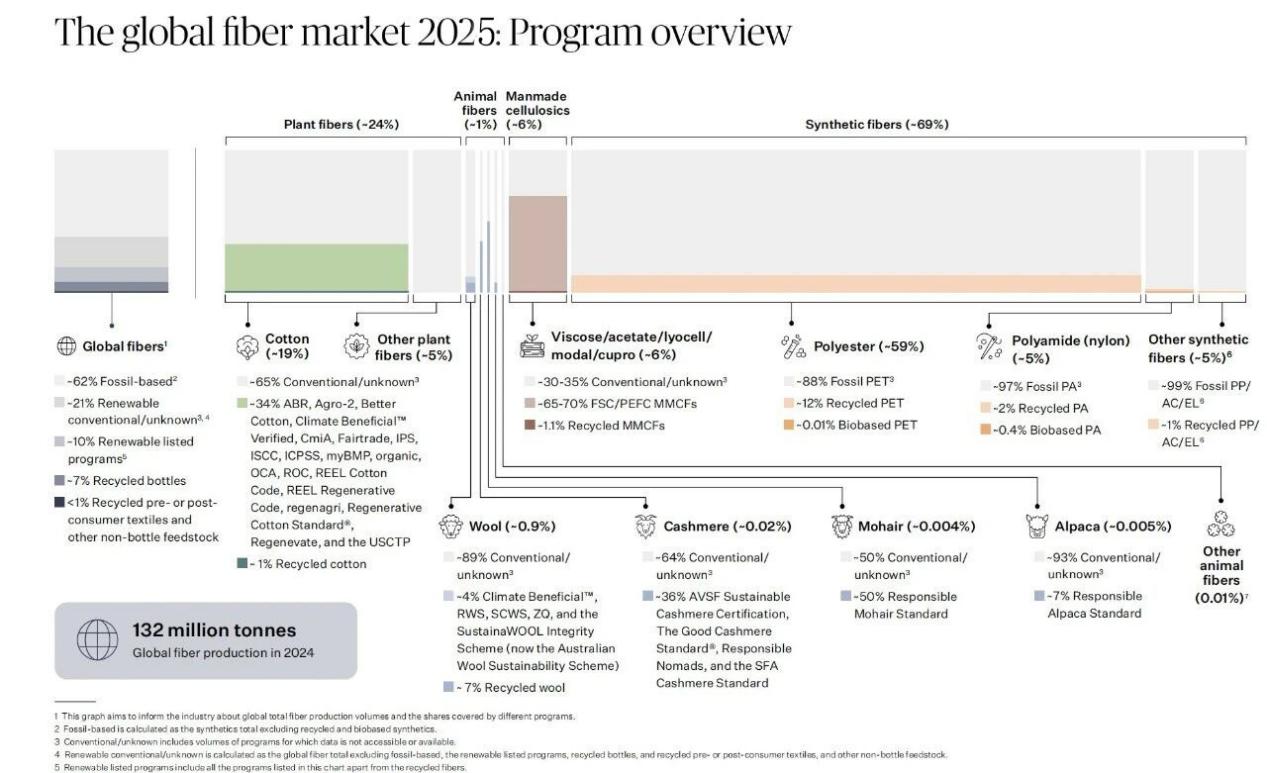
According to Textile Exchange's "Materials Market Report 2025," the global market share of recycled fibers remained at 7.6% in 2024. Although still limited in scale, it has become a core indicator for measuring the level of circular economy development in the industry. The current recycled materials market is characterized by "uneven product categories, technological breakthroughs needed, and reliance on a single raw material"—recycled polyester dominates, while the recycling rate of textile-to-textile products is less than 1%. The recycling of blended fabrics and the improvement of certification and traceability systems remain key issues that urgently need to be addressed.
1. Global Recycled Fiber Market Overview

In terms of product category structure, recycled materials are highly concentrated in synthetic fibers, especially recycled polyester, specifically distributed as follows:
Recycled Polyester: Increased from approximately 8.9 million tons in 2024 to approximately 9.3 million tons in 2025. It accounts for 12.0% of total polyester production, slightly lower than 12.5% in 2024.
Recycled Wool: Approximately 83,000 tons, the category with the highest recycling rate among animal fibers, accounting for 7% of the global wool market.
Recycled Cotton: Approximately 300,000 tons, with a low share due to technological limitations, accounting for only 1% of total global cotton production.
Recycled Man-Made Cellulose Fibers (MMCFs): Approximately 90,000 tons, accounting for approximately 1.1% of total MMCF production, an increase from 0.7% in 2023.
Recycled Nylon (Polyamide): Accounting for approximately 2.3%, with technological challenges and raw material limitations being the main bottlenecks.
Other Recycled Synthetic Fibers (Elastic Fibers, Polypropylene, etc.): Accounting for approximately 1.5% in total, with recycling rates generally below 5%.
The current recycled fiber market faces two major constraints:
Raw material dependence on non-textile products: 98% of recycled polyester raw materials come from plastic bottles, with only 2% from textile recycling. Recycled cotton and wool are also mainly from pre-consumer waste (such as fabric mill scraps), with post-consumer textile recycling accounting for less than 1%, failing to form a closed-loop "textile-to-textile" cycle.
The challenge of recycling blended fabrics: Approximately 60% of global textiles are blended materials (such as cotton-polyester, cotton-elastomeric fibers). Different fibers have significantly different chemical properties. Mechanical recycling requires manual separation (high cost and low efficiency), while chemical recycling requires customized processes. Currently, only a few startups (such as companies specializing in chemical recycling) are exploring high-value blended fabric recycling technologies, and large-scale application has not yet been achieved.
- Recycled Polyester: Dominant Market but with a Single Structure
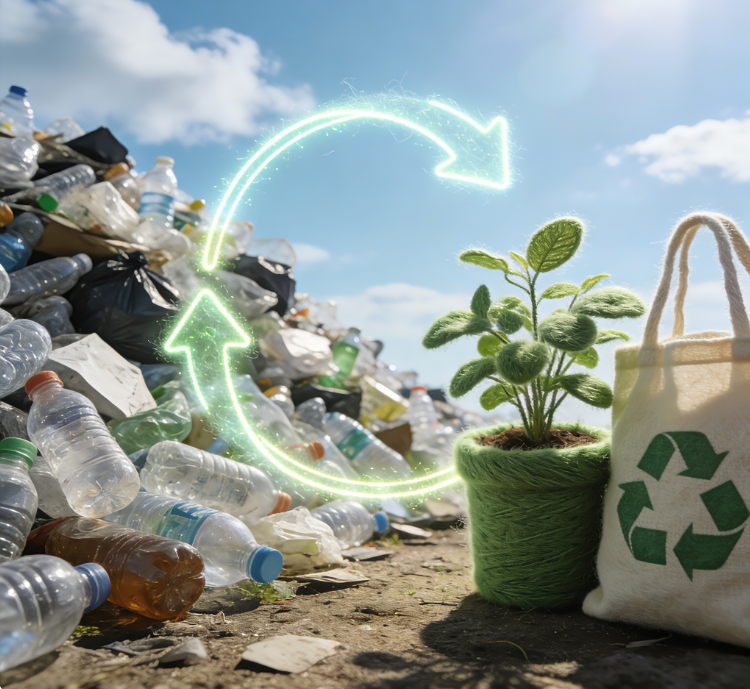
Global recycled polyester production increased from 8.9 million tons in 2024 to 9.3 million tons in 2025. However, due to the even larger increase in virgin polyester production (from 62 million tons to 68 million tons), its market share in the polyester category decreased from 12.5% to 12.0%, though it remains the category with the highest recycling rate among synthetic fibers.
98% of recycled polyester uses plastic bottles (PET bottles) as raw material, with only 2% coming from textile recycling (including pre-consumer scraps and post-consumer old clothes). Marine or near-shore plastic (OBP) accounts for less than 0.005% of the raw material. In 2025, OBP-certified recycled polyester fiber production was only 420 tons (compared to 750 tons in 2024), mainly produced in China, with smaller amounts from Indonesia and India. The decline was attributed to an Indonesian buyer reducing its fiber-grade OBP certification volume. Recycling Technology
Mechanical recycling is the primary method, while chemical recycling technology is in its early commercialization stages. Some companies have launched chemical recycling production lines, but face challenges such as high costs, high energy consumption, and insufficient raw material consistency. Bio-recycling technology is still in the research and development stage and has not yet been applied to industrial production.
2. Recycled Nylon (Polyamide): Technological Bottlenecks Constrain Growth
From 2024 to 2025, global polyamide (nylon) fiber production increased from 6.7 million tons to 7 million tons, accounting for approximately 5% of total global fiber production. Polyamide production has maintained steady growth over the past five years.
The recycled polyamide fiber market also showed growth, but at a slower pace. In 2025, global recycled polyamide production was approximately 200,000 tons. Affected by technological challenges, limitations in raw material quality and availability, and investment needs, the market share of recycled polyamide remains low, accounting for approximately 2.3% of total polyamide fiber production in 2025.
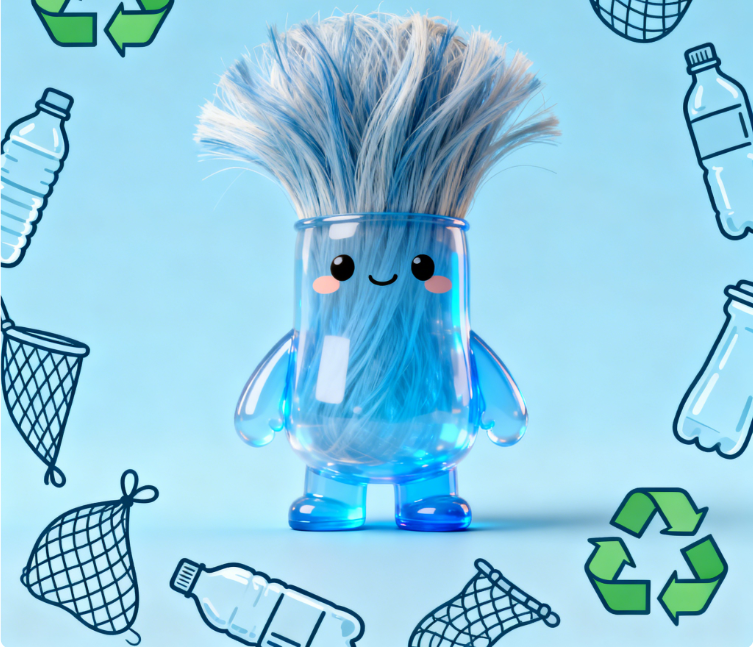
Recycled polyamide can be produced from pre- or post-consumer waste. Pre-consumer waste may include processing waste, fabric scraps, or rigid polyamide waste; post-consumer polyamide is made from materials such as discarded fishing nets, carpets, or other waste textiles. Recycling processes for polyamide can be divided into mechanical and chemical methods.
Are Sustainable Materials Really More Expensive? A Price Analysis in Bag Industry
Differences Between Coated and Uncoated Fabrics in Bag Applications
Related Article